
Root Canal
Save your tooth as part of restorative care · Stockton, CA
Expert root canal therapy in Stockton, CA
Welcome to Stockton Comfort Dental for root canal treatment in Stockton, CA. Led by Dr. Katireddy, we provide careful endodontic care to save natural teeth that are badly decayed or infected—using comfortable techniques and clear communication at every step.
Root canal therapy removes diseased tissue from inside the tooth, disinfects and seals the canals, then allows the tooth to be restored with a filling or crown. It’s a cornerstone of restorative dentistry: keep your own tooth when it’s safe to do so, and protect it for years of chewing and smiling.
Benefits of root canal treatment
- Preserve your natural tooth: avoid extraction when the tooth can be saved with endodontic care.
- Relieve pain: treat infection and inflammation inside the tooth so symptoms can improve.
- Restore function: after sealing and restoration (often a crown), you can chew more comfortably again.
- Help stop infection spread: cleaning and sealing the canals reduces risk to nearby bone and teeth.
- Maintain your smile: keeping your own tooth supports natural appearance and bite alignment.
What to expect during root canal therapy
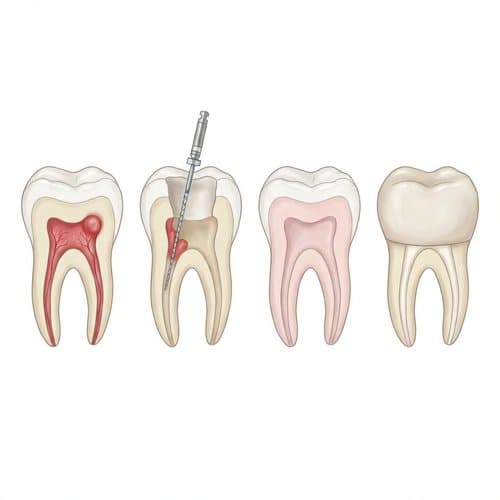
We use careful diagnosis, comfortable anesthesia, and thorough cleaning so your tooth can be sealed and restored:
- Diagnosis & imaging:We examine your tooth and use imaging to confirm the extent of decay or infection and plan treatment.
- Comfort & access:The area is numbed with local anesthesia. A small opening is made to reach the pulp chamber and root canals.
- Pulp removal & cleaning:Infected or inflamed pulp tissue is removed, and canals are cleaned and shaped for disinfection and filling.
- Disinfection:The inside of the tooth is thoroughly disinfected to reduce bacteria before sealing.
- Sealing the canals:Canals are filled with a biocompatible material and the tooth is sealed to help prevent reinfection.
- Restoration:A filling or crown is planned to rebuild strength—often a crown on back teeth that take heavy chewing forces.
Frequently asked questions about root canals
Is a root canal painful?
With local anesthesia and modern techniques, treatment is typically no more uncomfortable than a routine filling for most patients. The goal is to relieve the pain caused by infection or nerve inflammation.
How long does a root canal take?
Many cases are completed in one or two visits, depending on tooth complexity and infection. Each appointment is often on the order of about 60–90 minutes—we’ll give you a realistic estimate for your tooth.
Will I need a crown after a root canal?
Often yes, especially for molars and premolars that absorb heavy bite forces. A crown protects the tooth from fracture after treatment. We’ll recommend what fits your case.
Can a root canal-treated tooth become reinfected?
Reinfection is uncommon when the tooth is well sealed and restored, but it can happen if a crown leaks, the tooth cracks, or oral hygiene is neglected. Regular exams and good home care support long-term success.
How does root canal therapy fit into restorative dentistry?
It’s often the first step in saving a tooth so it can be rebuilt—removing disease from inside, then placing a strong restoration or crown as part of your overall bite and smile plan.
Understanding root canal therapy
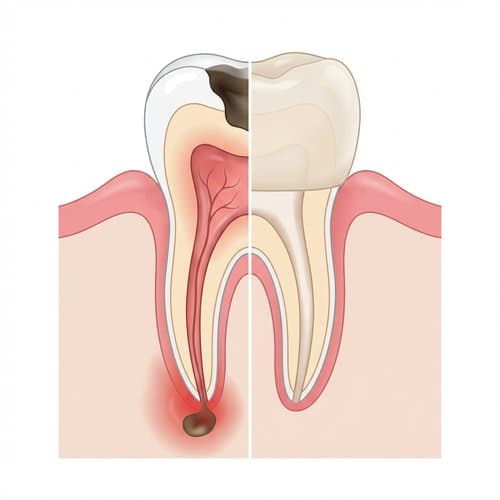
Root canal treatment (endodontic therapy) addresses infection or inflammation in the pulp—the soft tissue inside the tooth. After the pulp is affected by deep decay, cracks, or trauma, bacteria can cause pain and swelling. We gently remove the infected tissue, clean and shape the canals, disinfect, and seal the space with biocompatible materials. That helps stop infection from progressing and sets the stage for a durable restoration.
Signs you may need a root canal
Not every toothache means a root canal, but these symptoms should be evaluated promptly:
- Persistent pain when chewing or biting, or pain that wakes you up.
- Lingering sensitivity to hot or cold that doesn’t go away quickly.
- Darkening of a single tooth or obvious damage from decay or injury.
- Swelling or tenderness in the gums near a specific tooth.
- Deep decay or a large crack that reaches the nerve space.
After your root canal
To support healing and protect the treated tooth:
- Brush and floss as directed, including around the restored tooth.
- Until your final crown or restoration is placed, avoid chewing very hard or sticky foods on that tooth if we advise you to.
- Attend follow-up visits so we can check healing and complete the permanent restoration.
- Call if you notice increasing pain, swelling, or a bite that feels “off.”
Meet Dr. Katireddy
Dr. Katireddy combines thorough diagnosis with a restorative mindset—so root canal therapy isn’t isolated from the rest of your mouth: the goal is a comfortable, lasting result that fits your bite and long-term dental health.
Schedule Root Canal
Questions or ready to book? Call (209) 956-0880 or schedule online.